


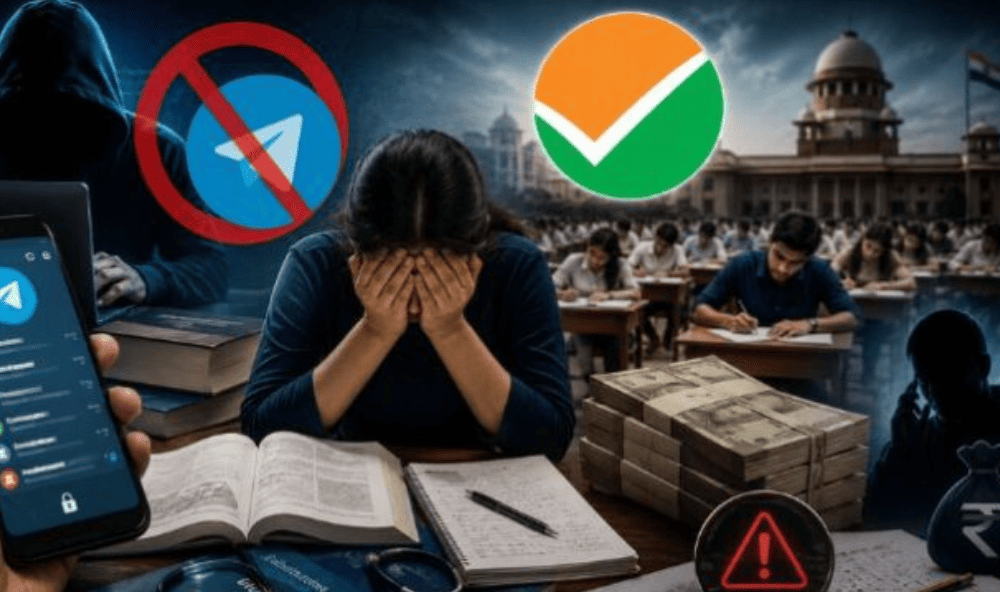
Introduction to India’s Biggest Education Controversy
India’s education system has faced scandals before, but the NEET-UG 2026 paper leak feels different. It is bigger, deeper, and far more disturbing because it combines two explosive issues: exam fraud and digital platform misuse. The government’s temporary restriction of Telegram until June 22 created nationwide debate, with millions questioning whether this was a smart security move or a dangerous precedent. According to Reuters, over 2.3 million students were impacted by the cancellation and re-examination process.
For students preparing for years, this wasn’t just an exam issue—it was their future hanging in the balance. Imagine running a marathon only to be told the race is invalid because someone cheated. That’s exactly how many aspirants felt. The NEET scandal exposed serious cracks in India’s exam infrastructure, and Telegram became the center of the storm.
What Exactly Happened in the NEET-UG 2026 Paper Leak?
The scandal started when investigators found that several questions in the May 3 NEET exam matched leaked content circulating online before the exam. This wasn’t random. Authorities discovered organized networks selling papers, promising “guaranteed selection,” and charging huge amounts.
The National Testing Agency (National Testing Agency) canceled the original exam after evidence surfaced. This decision triggered chaos because millions had already appeared. Reports showed that Telegram channels were actively sharing leaked papers, answer keys, and fake “confirmed papers.”
The leak spread like wildfire because Telegram allows large groups, anonymous usernames, and fast file-sharing. In a country where competitive exams decide careers, this created a black market worth crores.
Why Did India Temporarily Ban Telegram?
The Indian government invoked Section 69A of the IT Act to block Telegram temporarily. The official reason was clear: prevent fake papers, fraud, and misinformation before the re-exam. The Delhi High Court upheld this decision till June 22, agreeing that exam integrity was at stake.
But here’s the twist—Telegram argued this was unfair to its estimated 150 million Indian users. That’s like shutting down an entire highway because a few criminals used it. Critics called it digital overreach, while supporters called it necessary.
The government also asked Telegram to disable message editing till June 30, claiming scammers used edited posts to create fake proof of leaks after exams. That’s a rare move, showing how serious authorities are taking digital manipulation.
The Dark Network of Exam Fraud
Exam fraud in India is no longer simple cheating. It has evolved into a cybercrime ecosystem. Reports from Times of India revealed fraudsters were using:
- VPNs
- Encrypted groups
- Secret codes
- Fake payment gateways
- Disposable phone numbers
Even after Telegram restrictions, many shifted to WhatsApp and other platforms.
This proves one thing: banning a platform doesn’t kill the fraud network—it only moves it. Think of it like squeezing a balloon. Press one side, and the air shifts elsewhere.
The biggest concern is insider involvement. Paper leaks rarely happen without someone from the system helping. That’s where the real danger lies.
Student Reactions and Mental Pressure
This scandal hit students the hardest. Reuters reported that many aspirants sought psychiatric help due to stress.
Imagine studying for 16 hours a day for two years, sacrificing social life, family time, and mental peace—only to hear your exam is canceled. That kind of emotional shock is brutal.
Many students protested in cities like Delhi, Patna, and Kota. Some demanded justice, while others simply wanted clarity. Social media was flooded with frustration.
The psychological toll is massive:
| Impact | Effect |
|---|---|
| Anxiety | Fear of unfair competition |
| Depression | Feeling of wasted effort |
| Sleep disorders | Due to uncertainty |
| Loss of trust | In the exam system |
This isn’t just an education issue. It’s a mental health crisis.
Is Banning Telegram the Right Solution?
That’s the million-dollar question.
Supporters say yes—because stopping a leak before the exam matters. Critics say no—because Telegram is just a tool, not the root problem.
Experts compare it to banning knives because crimes happen with knives. The issue is not the object but the user.
Digital rights groups argue this creates a dangerous pattern where governments can block platforms whenever convenient. Meanwhile, education authorities insist drastic times need drastic actions.
Here’s a quick comparison:
| Argument | For Ban | Against Ban |
|---|---|---|
| Security | Stops spread quickly | Fraud shifts elsewhere |
| Students | Reduces fake leaks | Hurts study groups |
| Privacy | Temporary only | Dangerous precedent |
This debate may shape future internet regulations in India.
Comparison with Past Exam Leak Cases
India has seen leaks before—from SSC to CBSE. But NEET is different because of its scale. Over 2 million students compete for limited seats, with only about 5–6% getting admission.
Past leaks taught us one thing: weak internal security creates opportunities for organized crime.
But 2026 added a new layer—AI and encrypted apps. The government is now pushing ministries to strengthen cyber defenses against AI-driven fraud.
This means the future fight isn’t just against paper leaks. It’s against smart digital fraud.
The Future of Competitive Exams in India
The NEET scandal could trigger major reforms.
Possible changes include:
- AI-powered surveillance during paper transport
- Blockchain-based question paper storage
- Real-time leak detection systems
- Geo-tracked distribution
- Biometric candidate verification
If implemented, these could make leaks much harder.
India’s education system stands at a crossroads. It can either patch holes like before or rebuild the system stronger. The choice will define the future for millions of students.
Conclusion
The Telegram ban and NEET paper leak have exposed two uncomfortable truths: India’s exam system is vulnerable, and digital platforms can amplify fraud at lightning speed. But banning an app is like treating fever without finding the infection. The deeper issue lies inside the system itself.
This scandal may become a turning point. If authorities learn the right lessons, India could build the safest exam ecosystem in the world. If not, the cycle of leaks, protests, and broken trust will continue.
FAQs
1. Why was Telegram banned in India in 2026?
It was temporarily restricted to stop NEET paper leaks and exam fraud networks.
2. Was the NEET 2026 exam canceled?
Yes, the May 3 exam was canceled due to paper leak allegations.
3. How many students were affected?
Around 2.3 million students.
4. Did banning Telegram stop the fraud?
Not completely. Many fraudsters shifted to WhatsApp and VPN-based systems.
5. What reforms may happen after this scandal?
Stronger cybersecurity, AI monitoring, blockchain paper security, and stricter internal controls.