

Social Media & Human Psychology
The Rise of the Attention Economy
What Is Attention as a Currency
Let’s be honest for a second—your attention is the most valuable thing you own today. Not your money, not your time alone, but your attention. Every time you open an app, scroll through a feed, or tap on a notification, you’re essentially paying with your focus. In the modern digital world, this attention has become a currency, and social media platforms are the biggest marketplaces trading it.
Companies like Meta Platforms and TikTok are not just providing entertainment—they are competing for your time. The longer you stay on their platforms, the more ads you see, and the more money they make. It’s a simple equation, but the methods used to achieve it are anything but simple.
Think of your brain as a resource mine. Every scroll extracts a little bit of your focus, and platforms are designed to keep you mining endlessly. This is why features like autoplay, notifications, and endless feeds exist. They are not random—they are engineered to maximize engagement. The more engaged you are, the more predictable your behavior becomes, and that’s incredibly valuable in the digital economy.
Why Platforms Compete for Your Time
The competition for attention is fierce because it directly translates into revenue. Social media platforms rely heavily on advertising, and advertisers are willing to pay a premium for user engagement. This creates a system where platforms are incentivized to keep you hooked for as long as possible.
But here’s the twist—it’s not just about quantity, it’s about quality of attention. Platforms analyze what you like, how long you watch a video, what you skip, and even how you react emotionally. This data is then used to refine their algorithms, making them more effective at capturing your attention.
Imagine walking into a store where every product is tailored exactly to your taste. That’s what social media feels like. It’s personalized, engaging, and incredibly hard to leave. But this personalization comes with a cost—it shapes your perception of reality in ways you might not even notice.
How Social Media Manipulates Human Behavior
Psychological Triggers Used by Platforms
Social media platforms are built on psychological principles. They use triggers that tap into fundamental human behaviors—curiosity, validation, and fear of missing out (FOMO). Every like, comment, or share acts as a form of social validation, reinforcing your behavior.
One powerful trigger is unpredictability. You never know what you’ll see next when you scroll. This unpredictability keeps your brain engaged, similar to how slot machines work. Sometimes you find something exciting, sometimes you don’t—but you keep scrolling anyway.
Another trigger is social proof. When you see content with thousands of likes or shares, your brain assumes it must be valuable. This influences your perception and encourages you to engage with it.
Infinite Scroll and Habit Loops
Infinite scroll is one of the most effective design features in social media. It removes the natural stopping point, making it easy to lose track of time. You start with a few minutes, and suddenly an hour has passed.
This creates a habit loop—cue, action, reward. The cue might be boredom, the action is opening the app, and the reward is entertainment or validation. Over time, this loop becomes automatic, making social media usage almost subconscious.
The Science of Addiction
Dopamine and Reward Systems
Dopamine plays a crucial role in how social media affects the brain. It’s the chemical responsible for motivation and reward. Every time you receive a notification or see engaging content, your brain releases dopamine, reinforcing the behavior.
Why Social Media Feels Addictive
The addictive nature of social media lies in its ability to provide instant rewards. Unlike traditional activities that require effort and time, social media offers quick bursts of satisfaction. This makes it highly engaging and difficult to resist.
Algorithm Control and Personalization
How Algorithms Decide What You See
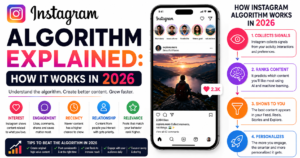
Algorithms analyze your behavior to determine what content to show you. They consider factors like engagement, preferences, and interaction history. This creates a personalized feed that keeps you engaged.
AI-Driven Content Personalization
Artificial intelligence has taken personalization to the next level. Platforms can now predict what you’ll like before you even know it yourself. This makes the experience more engaging but also more controlling.
Fake Reality and Social Comparison
The Illusion of Perfect Lives
Social media often presents a curated version of reality. People share their best moments, creating an illusion of perfection. This can lead to unrealistic expectations and dissatisfaction.
Impact on Self-Esteem and Identity
Constant comparison can negatively impact self-esteem. It can also influence identity, as people try to align themselves with perceived standards.
The Dark Side of Social Media
Mental Health Consequences
Excessive social media use has been linked to anxiety, depression, and stress. The constant need for validation and comparison can be mentally exhausting.
Misinformation and Echo Chambers
Algorithms often reinforce existing beliefs, creating echo chambers. This can lead to misinformation and polarized views.
Evolution of Social Media Trends
Short-Form Content Explosion
Short-form videos have become extremely popular, capturing attention quickly and effectively.
AI Influencers and Virtual Reality
AI-driven influencers and virtual environments are shaping the future of social media, creating new forms of interaction.
Taking Back Control
Conscious Usage and Digital Detox
Being aware of your usage patterns can help you regain control. Taking breaks from social media can improve mental clarity.
Building Healthy Online Habits
Setting boundaries and limiting screen time can create a healthier relationship with social media.
Future of Social Media and Human Behavior
The future of social media will likely involve even more advanced personalization and immersive experiences. The challenge will be maintaining control over how these platforms influence our lives.
Conclusion
Social media is not inherently good or bad—it’s a tool. But like any powerful tool, its impact depends on how it’s used. Understanding how platforms manipulate attention and behavior is the first step toward using them more consciously.
FAQs
1. Why is social media addictive?
Because it triggers dopamine release and provides instant rewards.
2. How do algorithms control content?
They analyze user behavior to personalize feeds.
3. What is the attention economy?
A system where user attention is monetized by platforms.
4. Can social media affect mental health?
Yes, excessive use can lead to anxiety and depression.
5. How can I reduce social media addiction?
Limit usage, turn off notifications, and take regular breaks.