
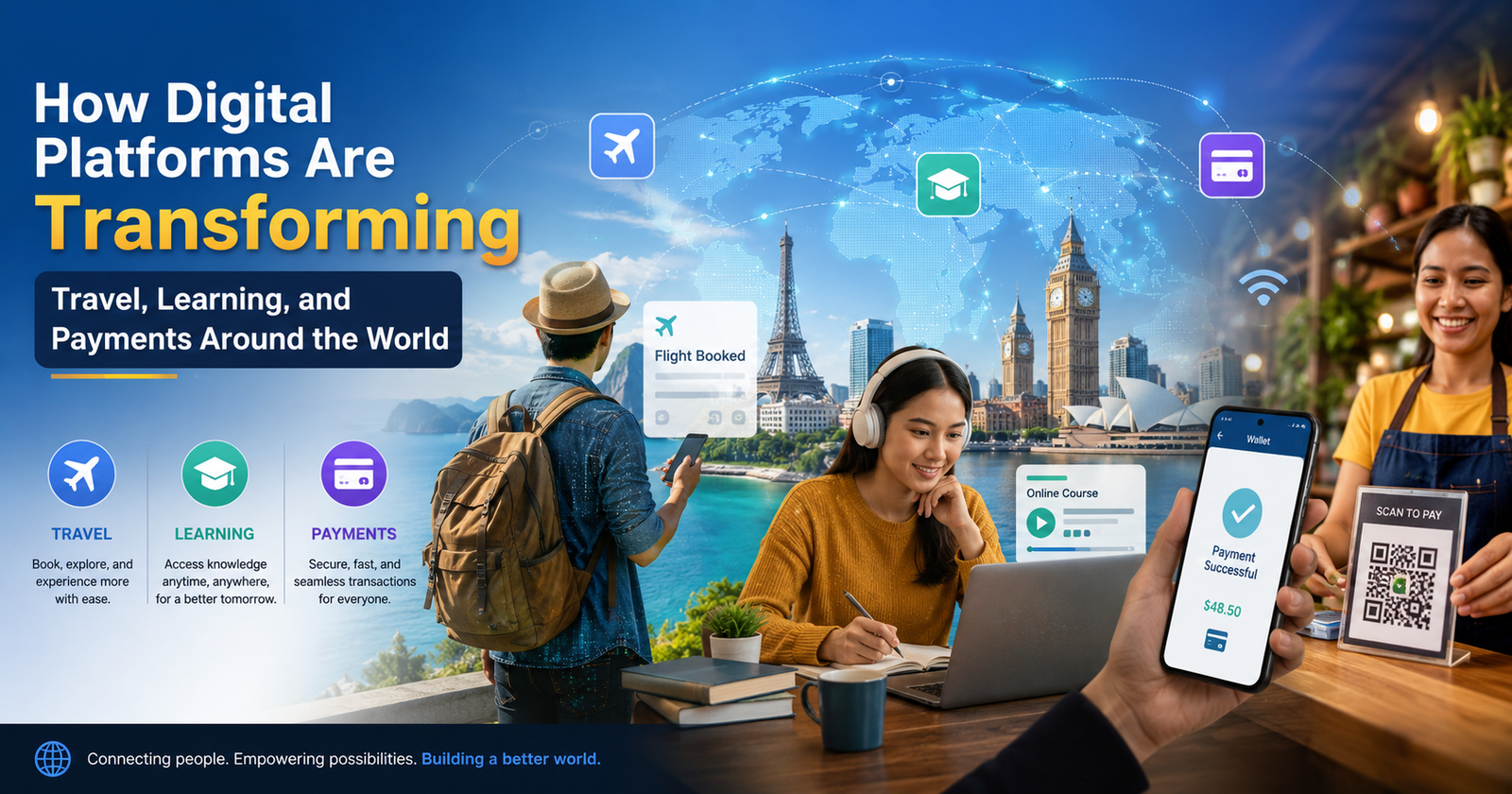
Technology has changed the way we live our daily lives. Today, people can travel, learn new skills, shop, and send money online easily using their smartphones or computers. Tasks that once took hours or days can now be completed in just a few minutes.
Whether it’s booking a holiday, joining an online class, or making instant digital payments, technology has made life faster, simpler, and more convenient for people around the world.
Digital platforms and smart apps are also helping businesses connect better with customers and create new opportunities for learning, growth, and financial services.
In this blog, we’ll look at how digital platforms are changing the way people travel, learn, and make payments globally.
What Are Digital Platforms?
Digital platforms are websites, mobile apps, or online systems that help people use different services through the internet quickly and easily. They make it easy for users to access businesses, products, information, and services.
Some common examples of digital platforms are:
- Travel booking apps
- Online learning websites
- Mobile banking apps
- Digital wallet services
- Online shopping platforms
These platforms help save time, make services easier to access, and improve the overall user experience for people around the world.
How Digital Platforms Are Changing the Travel Industry
The travel industry has become smarter and more convenient because of digital technology. People can organize their complete journey directly from their smartphones.
1. Easy Online Travel Booking
Earlier, people usually visited travel agents to book flight tickets and hotels. But now, digital platforms have made travel planning much easier and more convenient.
Today, travelers can:
- Book flights within minutes
- Compare hotel prices easily
- Find exciting travel offers and discounts
- Plan their entire trip online
- Read reviews from other travelers before booking
Because of these online platforms, planning a trip has become faster, simpler, and more budget-friendly.
2. Personalized Travel Recommendations
Modern travel apps understand user preferences and suggest things based on their interests and budget. They can recommend:
- Popular travel destinations
- Affordable hotels and stays
- Nearby tourist attractions
- Personalized holiday packages
This helps travelers enjoy better experiences that match their needs, style, and budget while making trip planning easier and more enjoyable.
3. Contactless and Digital Travel Services
Today, many travel services offer smart digital features such as:
- Digital check-ins
- Mobile boarding passes
- Online hotel checkouts
- Contactless payments
These features make traveling more convenient, save time, and help travelers avoid long waiting lines at airports, hotels, and other travel locations.
4. Real-Time Travel Information
Digital platforms give travelers real-time updates about:
- Flight delays or schedule changes
- Weather conditions
- Traffic updates
- Hotel room availability
- Navigation and travel routes
These instant updates help travelers plan better, save time, and avoid unnecessary stress during their journey.
5. Social Media Influence on Travel
Social media platforms have also changed the way people choose travel destinations. Today, many travelers discover:
- Hidden tourist places
- Famous food spots
- Helpful travel tips
- Exciting adventure activities
Travel influencers and content creators now inspire millions of people by sharing their travel experiences, photos, and videos online. This has become a major factor in shaping modern travel trends around the world.
How Digital Platforms Are Transforming Education
Education is no longer only about going to a classroom. Online learning platforms have made it more flexible, affordable, and easy to access for everyone.
Now, students and working professionals can learn new skills from home and study at their own speed, whenever it suits them.
1. Learning Without Location Limits
Digital learning platforms make it easy for people to study in different ways. Users can:
- Attend online classes
- Watch recorded lessons anytime
- Join live workshops and sessions
- Access study materials whenever needed
This flexibility is very helpful for students, working professionals, and anyone learning from home or remote locations.
2. Affordable Skill Development
Many online learning platforms offer affordable or even free courses in areas like:
- Digital marketing
- Coding and programming
- Graphic design
- Business management
- Communication skills
- Artificial intelligence
This makes it easier for people to build new skills and grow their careers without spending a lot of money on traditional education.
3. Self-Paced Learning
One of the main advantages of online education is its flexibility, which allows learners to:
- Study anytime they want
- Learn at their own pace
- Go back and repeat difficult topics
- Balance studies with work or personal life
This makes learning more comfortable, flexible, and suited to each person’s needs.
4. Interactive Learning Experience
Modern online learning platforms use different tools to make education more interesting and easy to understand, such as:
- Video lessons
- Live classes and discussions
- Online quizzes
- Interactive assignments
- AI-based learning tools
These features help students stay engaged and make learning more effective and enjoyable.
5. Global Access to Knowledge
Today, students can learn from many different experts around the world, such as:
- International teachers
- Industry professionals
- Top global universities
- Skilled trainers
Digital platforms make it possible for anyone to access high-quality education, no matter where they live.
How Digital Platforms Are Revolutionizing Payments
The payment industry has changed very quickly due to digital technology. Today, people expect payments to be fast, safe, and easy.
Because of this, cashless transactions are now becoming common all over the world.
1. Rise of Mobile Wallets
Mobile wallets make payments very easy for users. They can:
- Pay for things online
- Scan QR codes to make payments
- Send money instantly to others
- Shop without using cash
This has made everyday transactions quicker, simpler, and more convenient.
2. Faster Online Transactions
Digital payment systems now make money transfers very quick. People can enjoy:
- Instant bank transfers
- Real-time payments
- Fast international money transfers
- 24/7 payment services
Now, users don’t have to wait days for payments to complete.
3. Safer Payment Methods
Modern payment platforms focus on strong security. They use features like:
- OTP verification
- Fingerprint login
- Face recognition
- Fraud detection systems
These tools help keep users safe from scams and unauthorized transactions.
4. Growth of Online Shopping
Digital payments have helped online shopping grow quickly by making checkout easy. Customers can:
- Pay with one click
- Save payment details securely
- Use mobile wallets
- Check transaction history anytime
This makes the shopping experience smoother and more enjoyable.
5. Financial Access for More People
Digital payment platforms also help people who don’t have easy access to traditional banking. With mobile banking and fintech apps, users can:
- Save money digitally
- Send money internationally
- Receive online payments
- Manage their finances easily
This improves financial access and inclusion across many regions.
Benefits of Digital Platforms
Convenience
Digital services are available anytime on smartphones and computers, making life much easier.
Faster Processes
Tasks like booking travel, learning online, and making payments can be done in just a few minutes.
Better Accessibility
People from different countries can access the same online services without any barriers.
Lower Costs
Digital systems often reduce extra expenses, making services more affordable for users.
Personalized Experiences
Platforms can suggest services based on user preferences, behavior, and interests, creating a more customized experience.
Challenges of Digital Platforms
Although digital platforms offer many advantages, they also come with some challenges.
Internet Dependency
Most online services need a stable internet connection to work properly.
Data Privacy Concerns
People often worry about how their personal information is collected, stored, and used.
Cybersecurity Risks
Online fraud, hacking, and scams are increasing with more digital usage.
Digital Divide
Not everyone has equal access to the internet, especially in rural or less developed areas.
Technology Dependence
Individuals and businesses are becoming highly dependent on digital systems, which can be risky if systems fail.
The Future of Digital Platforms
Digital platforms will keep growing and improving with new technologies like:
- Artificial Intelligence (AI)
- Virtual Reality (VR)
- Blockchain technology
- Smart automation systems
- Biometric security features
In the future, we may experience:
- Fully automated travel systems
- AI-powered learning assistants for students
- Faster and easier global digital payments
- More personalized online services for users
Overall, technology will continue to make digital experiences smarter, faster, and more connected for everyone.
Final Thoughts
Digital platforms are changing the way people travel, learn, and handle money all over the world. They have made daily tasks much easier, improved access to services, and opened new opportunities for both individuals and businesses.
Travel is now more convenient, education is more flexible, and payments are faster and safer than before. With continuous improvement in technology, digital platforms will become more essential in our lives.
The future of digital transformation looks very promising, and businesses that adapt to these changes will continue to grow in today’s digital world.
What are digital platforms?
Digital platforms are online apps or systems that offer services like travel booking, online learning, shopping, and digital payments easily and conveniently.
How do digital platforms improve travel?
They make travel easier by simplifying bookings, giving real-time updates, offering personalized suggestions, and supporting cashless payments.
Why is online learning becoming popular?
Online learning is popular because it is flexible, affordable, and allows people to study from anywhere at their own pace.
What are digital payments?
Digital payments are cashless transactions made through mobile apps, online banking, or digital wallets.
What is the future of digital platforms?
The future will include AI-powered services, smarter automation, personalized user experiences, and faster global connectivity.